
· 8 min read
Arvind Karthik is a wildlife photographer and the founder of Katrivia Expeditions. He began photographing wildlife in 2014, turned professional in 2019, and works mainly in the Bandipur and Nagarahole tiger reserves.
TL;DR: Ranganathittu Bird Sanctuary is a cluster of river islets on the Kaveri near Mysuru, Karnataka, where photographers shoot nesting painted storks, spot-billed pelicans and spoonbills from boats rowed by sanctuary staff. The official Ranganathittu website lists more than 221 bird species[1] and opening hours of 06:00 AM to 05:30 PM, and advises visitors to arrive early in the morning and hire a boat. Winter migrants reach Ranganathittu in November and stay until March, according to Tripadvisor’s listing for the sanctuary[2], and dated visitor accounts report chicks in the nests from February to May. No official fee schedule, boat timetable or photography rulebook for Ranganathittu appears in the sources reviewed for this guide, so confirm all three with the park office before travelling.
Ranganathittu suits bird photography because the colonies nest over the water
Ranganathittu Bird Sanctuary is a protected group of six islets in the Kaveri river in Karnataka’s Mandya district, 3 km from Srirangapatna and 16 km north of Mysuru, according to Wikipedia[3]. The same entry puts the area at about 40 acres. That small footprint is the photographic advantage: the birds are concentrated, and the boat passes close to them.
Writer Sabyasachi Roy, in an undated essay for The Hooghly Review[4], describes boarding a boat and within minutes gliding past spoonbills, painted storks and Asian openbills building nests in colonies on twigs that hang over the river. The official Ranganathittu website calls the sanctuary a popular destination for bird watchers and wildlife photographers.
Temperament decides whether the place works for you. On the Team-BHP forum, a Bengaluru photographer who has visited many times wrote in an April 2019 travelogue[5] that Ranganathittu is “a perfect setup” for anyone with patience and a love of the camera, and “a boring place” for a casual traveller on a stopover. Ranganathittu rewards the photographer who stays with one nest and waits for behaviour, and it disappoints the visitor who wants a different species at every turn.
Visitor ratings are favourable: at the time of research, Ranganathittu held a 4.4 out of 5 rating from 611 Tripadvisor reviews. The complaints are specific, though. Individual reviewers reported a boatman who offered no information about the birds (February 2025), a wait of almost an hour for a boat (July 2024) and few bird varieties on a September 2024 visit. Other reviewers in February and April 2025 found the rower knowledgeable, so guide quality varies by boatman, and reading up on the species beforehand removes that dependence.
What is the best time to visit Ranganathittu Bird Sanctuary?
No single authoritative window exists, and the sources disagree. The official Ranganathittu website says the sanctuary can be visited throughout the year. Tripadvisor’s listing[6] narrows the winter-migrant season to November through March, and an undated travel blog (On My Canvas) recommends December to February. Each writer appears to have gone for something different (migrants, nest-building or chicks), which is the likeliest reason the months do not match.
Dated first-hand accounts are more useful than any of those ranges, because they record what was happening at the nests. The table sets them beside the Tripadvisor window, by period.
| Period | What visitors reported | Account |
|---|---|---|
| November to March | Winter migrants present alongside the resident birds | Tripadvisor listing description, undated |
| December | Early nesting: pelicans and cormorants collecting nesting material, no chicks yet | FramesOfNature, one December visit |
| February | Pelicans, openbill storks and painted storks tending chicks in the nest | Currylines, visits on 8 and 19 February 2026 |
| March to May | Chicks in nests, with painted storks, pelicans, spoonbills and crocodiles | Tripadvisor reviews dated March 2026 and May 2025 |
| September | Few bird varieties; sanctuary reported closed in the rainy season until 15 September | Tripadvisor review dated September 2024 |
The December row comes from one photographer’s visit, written up on FramesOfNature[7]. The pelicans were still building their nests that month: they were carrying twigs, and no chicks had hatched yet. Choose the month by the picture you want: nest-building in December, feeding at the nest from February. February and March are the only months in these accounts where the November-to-March migrant window and the reports of chicks overlap.
Check the river in the monsoon, because floods can stop the boats
Ranganathittu floods heavily in certain rainy seasons, when water is released from the Krishna Raja Sagara dam upstream, according to Wikipedia[8]. Boating is suspended during heavy flooding and visitors watch the nesting birds from a distance. The September 2024 reviewer in the table reported an outright closure that ended on 15 September that year.
Against that, the official Ranganathittu website calls the sanctuary a year-round destination and publishes no closure dates, so no fixed monsoon closure can be stated. A phone call to the park office in the rainy months is the only reliable check.
Morning is the time of day most sources recommend
The official advice is to visit early in the morning. A Currylines blogger who visited twice in February 2026 prefers mornings to avoid the heat and the crowds that arrive later, and an April 2025 Tripadvisor reviewer found most birds sitting in the trees by afternoon. One July 2024 reviewer liked the evening instead, when many birds were returning to their trees.
No reviewed source describes light direction, golden hour or the better side of the boat at Ranganathittu. Katrivia founder Arvind Karthik’s general guidance for South India is that winter (roughly November to February) gives soft morning light, while summer heat and harsh light push shooting into the early morning and the golden hour.
The birds you can see at Ranganathittu, grouped by how they photograph
The official Ranganathittu website lists with no survey year, while Wikipedia says roughly 170 species have been recorded, also without a date.
Both figures are cumulative counts, and neither describes what one boat ride delivers. No reviewed source provides a month-by-month checklist, so the list below is limited to species named in dated accounts.
-
Colony nesters in the trees. Painted storks, Asian openbill storks and spot-billed pelicans are the most prominent birds at Ranganathittu, together with cormorants and several species of egret, according to the Currylines account from February 2026. These large, slow subjects nest in full view of the boat.
-
Waders and fishers at the waterline. The Currylines list continues with spoonbill, black-headed ibis, red-naped ibis, purple heron, pond heron and Oriental darter. Wikipedia adds woolly-necked stork and lesser whistling duck to the recorded species.
-
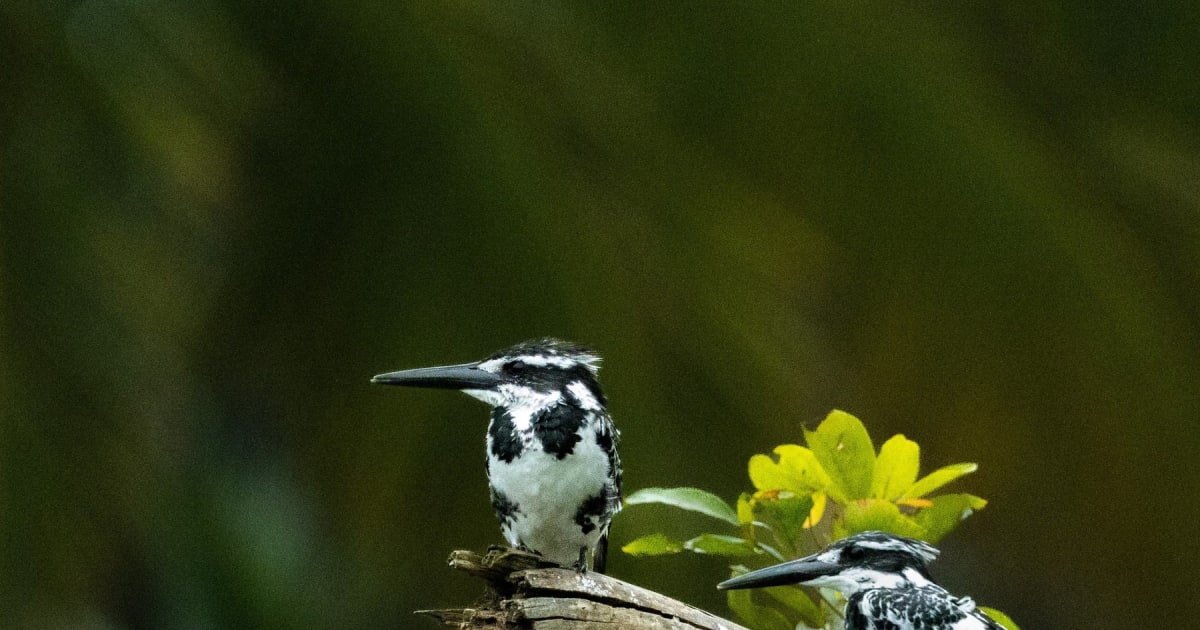
Small, fast birds. White-breasted, common and pied kingfishers, river terns, streak-throated swallows and great thick-knees all appear in the Currylines account. On a single December morning, the FramesOfNature photographer also recorded Indian thick-knee and white-browed wagtail.
-
Reptiles on the rocks. Mugger crocodiles (the freshwater marsh crocodile) were photographed on that December boat ride and reported by a Tripadvisor reviewer in March 2026. Beyond birds, the official Ranganathittu website counts 10+ reptiles and 25+ butterflies.
How the boat ride works, and which boat to ask for
Boating appears on the official Ranganathittu website’s list of services, next to an EV vehicle, with no prices or durations in the text reviewed. The practical detail comes from the Currylines blogger’s two visits in February 2026[9], which describe two kinds of boat.
| Feature | Shared public boat | Private boat |
|---|---|---|
| Roof | Covered top | Open |
| Capacity | Around 15 visitors | Maximum of 4 visitors plus the boatman |
| Ride length reported | 20 minutes | 30 minutes |
| Availability | Shared with other visitors | Fewer in number; booked up quickly |
Private boats are usually hired by photographers, Currylines notes, because the open top gives “unhindered views and clicks”. Separately, the FramesOfNature photographer recommends a “photography specific boat ride” that costs slightly more than a regular one, and neither account says whether that is the same private boat. Treat the ride lengths as reports and not as a timetable: an April 2025 Tripadvisor reviewer put the trip at 20 to 30 minutes.
Sanctuary staff row every boat, motorboats are not permitted and life jackets are compulsory, according to the Currylines account. Stepping out onto the rocks or islands is strictly prohibited, as is putting any part of your body into the water. Every frame on the river is therefore made from a moving rowboat whose position the boatman controls.
Booking, timings and charges: what is published and what is not
-
Confirm hours and river conditions. The official Ranganathittu website[10] and Tripadvisor both list 06:00 AM to 05:30 PM. No reviewed source gives the time of the first or last boat, so ask the park office, and in the rainy months ask whether boats are running at all.
-
Ask for the private or photography boat first. No reviewed source documents online or advance booking for these boats. Currylines reports only that private boats are few and are booked up quickly, which is the argument for an early arrival on a weekday, when the FramesOfNature photographer found thinner crowds.
-
Budget for fees, and confirm them at the counter. No official fee schedule for entry, boating or cameras appears in the sources reviewed for this guide, so no rupee figure is quoted here. Katrivia advises its guests that forest departments in Karnataka generally charge a separate camera fee that varies by park and by lens. Current charges are best confirmed with the Ranganathittu park office or the Karnataka Forest Department.
-
Carry water and snacks. The Currylines blogger found no food or water inside the gates in February 2026, only a small canteen in the parking area. Visitors cannot exit the inner gates and re-enter on the same ticket, according to that account.
No source recommends a lens for Ranganathittu, so here is what photographers used
No reviewed source recommends a focal length for Ranganathittu, and this guide does not invent one. Two first-hand accounts show what has worked from the boat.
The FramesOfNature photographer[11] shot the December boat ride hand-held with an OM-1 Mark II and a 300mm f/4 lens, which is 600mm in full-frame terms, and was happy with frames taken at ISO 2000 in low early light. That writer found the compact kit handled well “in constricted spaces like a boat”. Because the post thanks two people from OM for their support, read it as a possibly brand-supported trial and not as a neutral recommendation.
At the other end, the Currylines blogger found the nesting pelicans and storks “easy targets for the camera, even one as basic as mine”. Read together, the two accounts say that the large colony birds do not demand a long lens, and that a long lens has been used hand-held from the boat without trouble.
Nothing in the sources covers tripods or monopods on the boats, flash near nests or drones. Katrivia’s standing advice to guests on drones is to leave them at home, because flying one in a protected forest generally needs official permission.
Shore positions matter when the queue is long or the boats are not running. Currylines points to a lily pond lined with canna flowers that attracts tiny birds, a wooded patch with a good chance of land birds, and a few watch towers. An older Tripadvisor review[12], from 2014, mentions benches around the river.
Combining Ranganathittu with Mysuru or a Kabini trip
With boat rides reported at 20 to 30 minutes, Ranganathittu fills a morning and leaves the rest of the day free. At 16 km from Mysuru and 3 km from Srirangapatna by Wikipedia’s figures, a dawn session is practical from a hotel in either town. From Bengaluru, a Team-BHP forum member put the drive at about 120 km in 2019. This guide quotes no drive times, because the reviewed sources contain no reliable ones.
Kabini is the natural second half of the trip. As Katrivia describes it, Kabini is an entry point into Nagarahole Tiger Reserve, known for its backwaters and boat safaris. Ranganathittu gives waterbird colonies at close range from a rowboat; Kabini adds the forest safari, where sightings are never guaranteed. Arvind Karthik’s film shows a guided Katrivia tour at Kabini[13].
Katrivia Expeditions runs a Ranganathittu birding tour alongside its Kabini tour and other birding tours. Founder Arvind Karthik’s guidance is to book Katrivia’s South India tours at least two months in advance. Current dates, price and inclusions are on each tour page.
Frequently asked questions
Frequently asked questions
- What is the best time to visit Ranganathittu Bird Sanctuary?
- Ranganathittu Bird Sanctuary is officially open to visitors throughout the year, and no single best window is published. Tripadvisor’s listing says winter migrants stay from November to March, and dated visitor accounts report chicks in the nests from February to May. February and March are the months where those two periods overlap.
- Which birds can I see at Ranganathittu?
- The most prominent birds at Ranganathittu are painted storks, Asian openbill storks, spot-billed pelicans, cormorants and egrets, according to a February 2026 visitor account. Spoonbills, ibises, herons, Oriental darters, kingfishers, river terns and great thick-knees are also listed. The official Ranganathittu website counts more than 221 bird species in total.
- Is Ranganathittu good for bird photography?
- Ranganathittu is good for bird photography because large waterbirds nest in colonies over the river and staff-rowed boats pass close to them. One February 2026 visitor called the nesting pelicans and storks easy camera subjects even with basic equipment. Patience matters: a frequent visitor warns that casual travellers find Ranganathittu dull.
- What are the Ranganathittu Bird Sanctuary timings?
- Ranganathittu Bird Sanctuary is open from 06:00 AM to 05:30 PM, according to the sanctuary’s official website, and Tripadvisor lists the same hours. Neither source gives the time of the first or last boat. Confirm boat timings with the Ranganathittu park office before planning a dawn shoot.
- How much is the entry fee and camera fee at Ranganathittu?
- No official fee schedule for Ranganathittu entry, boating or cameras appears in the sources reviewed for this guide, so no rupee figure is given here. Forest departments in Karnataka generally charge a separate camera fee that varies by lens, according to Katrivia. Confirm current charges with the park office or the Karnataka Forest Department.
- Is Ranganathittu open during the monsoon?
- Ranganathittu has no published monsoon closure dates, and the official website says the sanctuary can be visited all year. Wikipedia notes that boating is suspended during heavy flooding, when the Krishna Raja Sagara dam upstream releases water. One reviewer reported a rainy-season closure that ended on 15 September 2024, so call ahead.
Sources
- Home – Mysore Circle Ranganathittu Bird Sanctuary official website (Mysore Circle / Mysuru Wildlife Division) ↩
- Ranganathittu Bird Sanctuary – All You SHOULD Know Before Going (2026 Reviews) Tripadvisor (user review by ‘Shilpa D’) ↩
- Ranganathittu Bird Sanctuary – Wikipedia Wikipedia ↩
- A Haven for Winged Wanderers: Ranganathittu Bird Sanctuary – THE HOOGHLY REVIEW The Hooghly Review (personal essay by Sabyasachi Roy) ↩
- A day out @ Ranganathittu Bird Sanctuary – Team-BHP Team-BHP forum travelogue by member Amyth Prabhakar ↩
- Ranganathittu Bird Sanctuary – All You SHOULD Know Before Going (2026 Reviews) Tripadvisor (user review by ‘Shilpa D’) ↩
- Ranganathittu – A quick weekend getaway | FramesOfNature FramesOfNature (photographer’s blog) ↩
- Ranganathittu Bird Sanctuary – Wikipedia Wikipedia ↩
- Ranganathittu Bird Sanctuary – Trip 2 and Trip 3 – Currylines – Caroline’s Currylines (personal travel blog) ↩
- Home – Mysore Circle Ranganathittu Bird Sanctuary official website (Mysore Circle / Mysuru Wildlife Division) ↩
- Ranganathittu – A quick weekend getaway | FramesOfNature FramesOfNature (photographer’s blog) ↩
- Love bird photography? head here… – Review of Ranganathittu Bird Sanctuary, Srirangapatna, India – Tripadvisor Tripadvisor user review (NancyDesai) ↩
- youtube.com ↩