
· · 7 min read
Arvind Karthik is a wildlife photographer and the founder of Katrivia Expeditions. He began photographing wildlife in 2014, turned professional in 2019, and works mainly in the Bandipur and Nagarahole tiger reserves.
TL;DR: My pick for the best tiger safari in India for photographers is Bandipur Tiger Reserve in Karnataka, where I have photographed for the past ten years, because familiarity with one forest’s animals, seasons and light builds up in a way a single trip cannot match. Every ranking of tiger reserves, mine included, is an opinion. For sighting chances alone, a DPReview forum contributor who had visited five parks by February 2022 suggests Kanha, Bandhavgarh and Ranthambore for a first trip[1], or Tadoba, Kanha and Ranthambore as the alternative. Even Bandhavgarh promises nothing: a photographer who went in May 2024 waited until the third day for a first decent tiger sighting[2]. Choose a tiger reserve for its habitat and season, travel in a small jeep, and plan for days without a tiger.
Why Bandipur is my pick for tiger photography
Bandipur Tiger Reserve is where I became a wildlife photographer, and I have kept going back for ten years. Those repeated safaris taught me to read alarm calls, anticipate where an animal will move and understand behaviour well beyond what any one safari teaches. Familiarity with a forest’s resident animals, seasonal patterns and light builds up over repeated visits in a way a single trip cannot match.
- Alarm call
- the warning sound a prey animal such as a chital or sambar makes when a predator is near, which trackers follow to find a tiger they cannot yet see.
A tiger photograph is rarely only a portrait. Bandipur’s meadows and grasslands reward a lens that can move between a wide environmental frame and a tighter portrait, because the habitat is often as important as the animal. An environmental frame is a wildlife photograph in which the habitat takes up as much of the picture as the subject does. Dry trees around a tiger tell the story of summer, and lush undergrowth around a leopard tells the story of the monsoon.
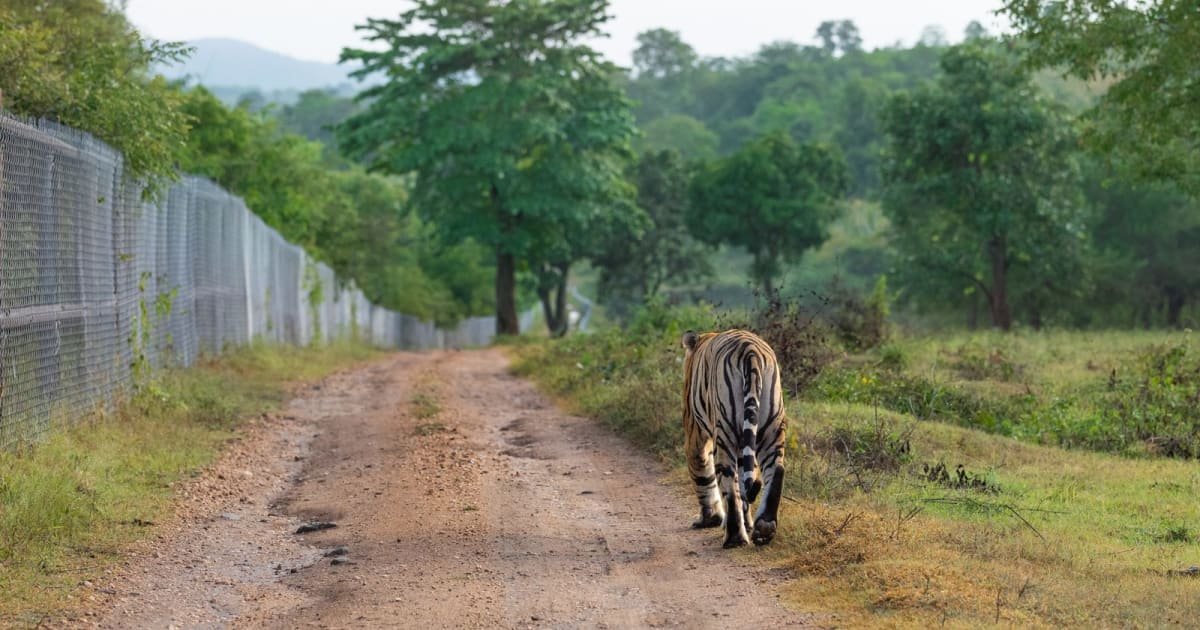
Habitat counts for more in India than on an African plain. Smart Luxury’s May 2025 guide to tiger safaris notes that India’s tiger searches unfold in dense forest, where visibility is a persistent challenge[3], unlike Africa’s open savannahs. Dense cover puts the forest into every frame, which is why knowing one forest well shows in the pictures. One of my clips shows a large male tiger resting in a Bandipur waterhole after a kill[4].
Bandipur is not my pick for the number of tigers you will count. Katrivia Expeditions never promises a sighting on any tour. Some of my most memorable sightings in Bandipur have come during the monsoon months, when the common assumption is that sightings drop. Current dates, price and inclusions for Katrivia’s Bandipur tour are on the tour page.
Where are you most likely to see a tiger in India?
Every answer to this question rests on trip reports, forum posts and reputation, including the confident answers. The DPReview contributor, who describes themselves as a non-professional, names Kanha, Bandhavgarh, Ranthambore, Pench, Tadoba, Corbett and Kabini as reserves that produce great tiger sightings.
Bandhavgarh in Madhya Pradesh carries the strongest reputation. A photographer posting on the Safaritalk forum in December 2024 called Bandhavgarh home to the highest density of tigers in India, without citing a figure or a survey. Read the claim as reputation.
That Safaritalk trip report is also the useful corrective. Its author expected tigers in Bandhavgarh to be easy and went days without a decent sighting, until a young female walked down the road on the third day. Vegetation explains much of the gap between reputation and result: the DPReview contributor, comparing India with a trip to Kenya, wrote that finding a tiger is very hard and that a tiger you do spot may be deep inside bushes.
The main tiger reserves compared, with the gaps left visible
First-hand ratings in this table are mine for Bandipur only. Every other cell quotes a named published account or a Katrivia field account.
| Reserve | Evidence on sightings | Backgrounds | Crowding |
|---|---|---|---|
| Bandipur, Karnataka | My own decade of safaris; no published rate | Meadows and grasslands that suit wide habitat frames | Nothing citable |
| Kabini and Nagarhole, Karnataka | Kabini named on DPReview; one Katrivia monsoon safari recorded a tigress with her cubs | Backwaters on the Kabini side, with boat safaris | Nothing citable |
| Bandhavgarh, Madhya Pradesh | Called India’s densest on Safaritalk, with no figure; one first sighting came on day three | Bandhavgarh Fort and the Shesh Shaiya statue in the Tala zone | “Total pandemonium” at one May 2024 sighting |
| Kanha, Madhya Pradesh | First-trip suggestion on DPReview; one writer searched five hours | Nothing citable | Nothing citable |
| Ranthambore, Rajasthan | First-trip suggestion on DPReview | Nothing citable | Nothing citable |
| Tadoba, Maharashtra | Alternative first-trip suggestion on DPReview | Nothing citable | Nothing citable |
| Pench, Madhya Pradesh | Named on DPReview | Nothing citable | Karmajhiri gate described as less frequented |
| Corbett | Named on DPReview | Nothing citable | Nothing citable |
My ranking, ordered by how much can be checked
Bandipur comes first on my own experience. Below it, the order follows the weight of first-hand evidence, Katrivia’s own before anyone else’s, and the whole list is an opinion.
-
Bandipur. I put Bandipur first because I have photographed there for ten years, and knowing one forest that well gives you better pictures than any single trip can. Meadow and grassland habitat gives wide frames as well as portraits, and I prefer the monsoon there.
-
Kabini and Nagarhole. Kabini and the Coorg side are two entry points into the same protected area, Nagarhole Tiger Reserve. On one Katrivia monsoon evening safari at Kabini, a tigress was seen hunting, calling for and reuniting with her cubs. Tour details are on the Kabini and Nagarhole pages.
-
Bandhavgarh. The published accounts favour Bandhavgarh for a first tiger photograph where the sighting itself is the goal. Crowding and travel are the price: the Safaritalk photographer’s 2024 journey took a 1 hour flight followed by a 4 hour road transfer[5], from a starting point the report does not name.
-
Kanha. Kanha appears in both first-trip combinations the DPReview contributor suggests. Patience is part of the deal: in an undated account, Ella McKendrick describes searching for five hours, following pug marks and listening for alarm calls[6], before a first tiger sighting.
-
Ranthambore. Ranthambore in Rajasthan also appears in both DPReview first-trip combinations. Nothing I can cite compares Ranthambore’s light or backgrounds with any other reserve, so those cells stay empty on the Ranthambore row.
-
Tadoba. Tadoba in Maharashtra is the DPReview contributor’s alternative to Bandhavgarh on a first trip.
-
Pench. Pench is named for great sightings on DPReview, and Katrivia has run past tours there. The one lead for photographers concerns a gate, covered in the next section.
-
Corbett. Corbett is named on DPReview and nowhere else in the material reviewed.
Crowding at a sighting decides more photographs than the tiger does
A sighting concentrates vehicles, because everyone in the park is searching for the same animal. The Safaritalk photographer described one Bandhavgarh sighting in May 2024 as “total pandemonium”: yelling, vehicles jockeying for position and a good photograph hard to get in the mess. One account of one sighting does not measure crowding across a park.
Vehicle size changes what you can do inside that crowd. A gypsy is the small open-air 4×4 used for safaris in Indian tiger reserves. The same photographer, used to larger safari vehicles, found the small gypsy much better for positioning on thin jungle roads.
Katrivia runs every safari in a jeep, with at most 7 guests, and the safaris come as part of a Katrivia tour. A jeep or a jeep seat is not offered on its own. My reason for the jeep is a personalised experience with like-minded people.
The gate you enter the park from also makes a difference. Smart Luxury’s May 2025 guide describes Pench’s Karmajhiri entrance as less frequented, with fewer vehicles[7], in a passage about a lodge near that gate. Treat that as a lead to check with the park office, since a lodge description is not a traffic count.
Which season gives the best light and the best visibility?
Dry months give visibility and cooler months give comfort and softer light, so no single month wins on both. The DPReview contributor, writing in February 2022, suggests summer (March to May) for a first visit, followed by winter (December to February), because the forest dries up, tigers are easier to spot around waterholes and visibility improves. That same post says most core areas stay closed from July to September for the monsoon and a few routes remain closed in November. Closure dates differ by park, so confirm them with the park office before you book travel.
South Indian forests keep a different calendar. Katrivia’s season guide for Bandipur, Kabini, Nagarhole and Bhadra puts winter at roughly November to February for soft morning light, summer at roughly March to May for dry-forest tones and sightings around water, and the monsoon at roughly June to September for green backdrops and diffused light. Summer heat and harsh light push the useful shooting into early morning and the golden hour. My own preference in Bandipur is the monsoon: rain reduces visibility on some days, and tigers still move when it rains.
Whatever the month, plan around two drives a day. The DPReview contributor puts them at approximately four hours in the morning and three in the evening, as of February 2022. Each park sets its own gate times, and they change by season.
Costs and booking: what a guided tour arranges
Permits, jeep slots and zone allocation are set by each park and change often. On a Katrivia tour they are arranged for you.
Katrivia’s regular tours run across South India, with occasional crossover and central India departures. South India tours should be booked at least two months in advance. Current dates, price and inclusions for each departure are on the tour pages: Central India tours, crossover tours and all Katrivia tours.
Frequently asked questions
- Which is the best tiger safari in India?
- No single tiger safari in India is the best for everyone. Arvind Karthik, founder of Katrivia Expeditions, picks Bandipur Tiger Reserve for photography after a decade of returning to it. For sightings alone, one DPReview forum contributor suggests Kanha, Bandhavgarh and Ranthambore for a first trip.
- Which tiger reserve is best for photography?
- Bandipur Tiger Reserve in Karnataka is Arvind Karthik’s pick for tiger photography, because Bandipur’s meadows and grasslands suit both wide habitat frames and tighter portraits. The pick is an opinion built on ten years in one forest.
- Where am I most likely to see a tiger in India?
- Bandhavgarh in Madhya Pradesh has the strongest reputation for tiger sightings, though reputation is not a measured rate. A DPReview forum contributor also names Kanha, Ranthambore, Pench, Tadoba, Corbett and Kabini. One photographer in Bandhavgarh in May 2024 waited until the third day for a first decent sighting.
- Is a tiger sighting guaranteed on an Indian safari?
- A tiger sighting is never guaranteed on an Indian safari. India’s tiger habitat is dense forest, and a tiger that is spotted can be deep inside bushes. Katrivia Expeditions does not promise a sighting on any tour, so a photographer should plan a trip that is worth making without one.
- What is the best time of year to photograph tigers in India?
- The best time to photograph tigers in India depends on the region. A DPReview forum contributor suggests March to May for visibility around waterholes, with December to February second, and notes that most core areas close from July to September. In Bandipur, Arvind Karthik prefers the monsoon, though rain reduces visibility on some days.
- How much does a tiger safari in India cost?
- For Katrivia tours, the current price, dates and inclusions are on each tour page.
- Does Katrivia run its tiger safaris in jeeps?
- Katrivia Expeditions runs its safaris in jeeps only, with at most 7 guests in a jeep. The jeep safaris are part of a Katrivia tour, and Katrivia does not offer a jeep or a jeep seat on its own. Arvind Karthik’s reason for the jeep is a personalised experience with like-minded people.
Sources
- Tiger Photo Safari – Experiences and recommendations | DPReview Forums DPReview Forums (user ‘jndutta’) ↩
- Photographing Tigers in Bandhavgarh and Kanha. An India Trip Report – India – Safaritalk Safaritalk forum trip report by user pscrimshaw (Scrimshaw Photography) ↩
- The Best Luxury Wildlife Resorts in India for a Tiger Safari | Smart Luxury Smart Luxury (Chandreyi Bandyopadhyay) ↩
- youtube.com ↩
- Photographing Tigers in Bandhavgarh and Kanha. An India Trip Report – India – Safaritalk Safaritalk forum trip report by user pscrimshaw (Scrimshaw Photography) ↩
- Where to Find Tigers in India – Ultimate Safari Guide 2026 Ella McKendrick (travel blog) ↩
- The Best Luxury Wildlife Resorts in India for a Tiger Safari | Smart Luxury Smart Luxury (Chandreyi Bandyopadhyay) ↩